
El Centro Neighbor Block Sources
A block search combines spatial, title, civic, and historical sources. The first three help identify the shape and public record of adjoining parcels. The last two can add dated people or community context, but neither is a complete list of everyone living nearby. Start with the row that matches the question and stop before turning a public field into an unsupported personal conclusion.
| Source | What it shows about a block | Access |
|---|---|---|
| City ArcGIS viewer | Parcel adjacency, map layers, public pop-up fields | Free visual map |
| Assessor and ParcelQuest | APN, situs, assessed owner, tax-mail destination | Address or APN route |
| Recorded maps and deeds | Lots, blocks, easements, title parties, dates | Online index and counter |
| Approved voter file | Registrants by residence when a lawful extract is approved | Restricted purpose |
| Historical directories | Listed occupants in a publication year | Library, NARA, archives |
| City archives and requests | Address-keyed municipal notices and nonexempt files | Archive search or request |
The immediate goal is a parcel map and a source date. A block is not always a neat row of house numbers. Corner lots, alleys, multi-APN sites, and intersections can make the next address different from the next parcel.
The city map route is the El Centro ArcGIS Web Application. Its public layers and pop-ups can change, so record the visible layer name and date if a block finding matters.
Note: Click adjacent parcel polygons rather than assuming the next house number is the next parcel.
El Centro Neighbor Parcel Map
Use the physical address in Imperial County ParcelQuest Lite and save the APN and situs result. Open the El Centro ArcGIS viewer, zoom to the site, click the target polygon, and inspect only the public fields the current map exposes. Then click each adjoining polygon. This is a visual adjacency method, not a claim that the map contains a resident list or a complete owner field.
The county warns that parcel information is not survey accurate. The city map's live layer names, pop-up fields, selection tools, and buffer features may change. If the map suggests a second parcel at one address, carry both APNs into the Assessor and Recorder workflow. Do not infer a neighbor from a house number alone.
Mapping El Centro Neighbors
A useful block walkthrough moves from the known address to documented adjoining parcels. It keeps the map, assessment, and title steps separate so a spatial line is not mistaken for a personal relationship.
- Normalize the target address and confirm the physical site rather than a PO box or mailing-only line.
- Record the target APN from ParcelQuest and open the same location in the city map.
- Click the target polygon, then each immediate adjoining polygon, and write down displayed APNs or map attributes.
- Review the Assessor result for each APN, labeling assessed owner and mailing destination separately.
- Use RecorderWorks, maps, permits, or historical directories only when a specific adjacent parcel question remains.
The result is a documented set of neighboring parcels. It is not proof that the assessed owners are current occupants, or that every person connected to a parcel lives there.
El Centro Neighbor Address Clues
Situs is the physical parcel location. The owner mailing address is where assessment correspondence goes. Those fields may differ when an owner receives mail elsewhere, uses a PO box, or directs notices through an agent. Around a block, a mailing address can be useful context for the assessed party, but it cannot identify who occupies the adjacent site.
The city's official parcel inventory shows local crosswalk issues: APNs use three hyphenated groups, an address can map to more than one APN, and intersections can appear as location records. Preserve directional prefixes and street types. A ZIP code is delivery geography and a business address is a public-facing affiliation. Neither substitutes for a situs and APN.
El Centro Neighbor Voter Limits
California's My Voter Status tool checks one voter's own registration and election information. It cannot be used to browse El Centro neighbors. A qualified recipient may receive a voter-file extract containing residence and mailing addresses and filter it by street, precinct, or ZIP for a permitted election, scholarly, journalistic, political, or government purpose. Commercial use is prohibited, and protected records must remain protected.
Even an approved extract is not a block roster. It can omit unregistered people, confidential voters, inactive voters not requested, noncitizens, and anyone whose address is protected. Participation history shows a recorded method for an election, never a ballot selection. Use the minimum fields and retain the purpose and extraction date.
El Centro Neighbor Archive Search
The City of El Centro CivicEngage Archive Center provides a municipal-document search with keyword, archive or category, and from/to date controls. It can help find agendas, notices, and selected city records tied to a public issue or address. It is not a historical city directory and does not replace a request to the department that holds an older permit, code file, or planning record.
For an address question, search a normalized street name and a date range, then read the document context. If the needed record is absent, use the City Clerk or NextRequest with the exact APN, department, date range, and file type. Active investigations and identifying complainant details may be withheld or redacted.
Open the El Centro Archive Center search for municipal material.
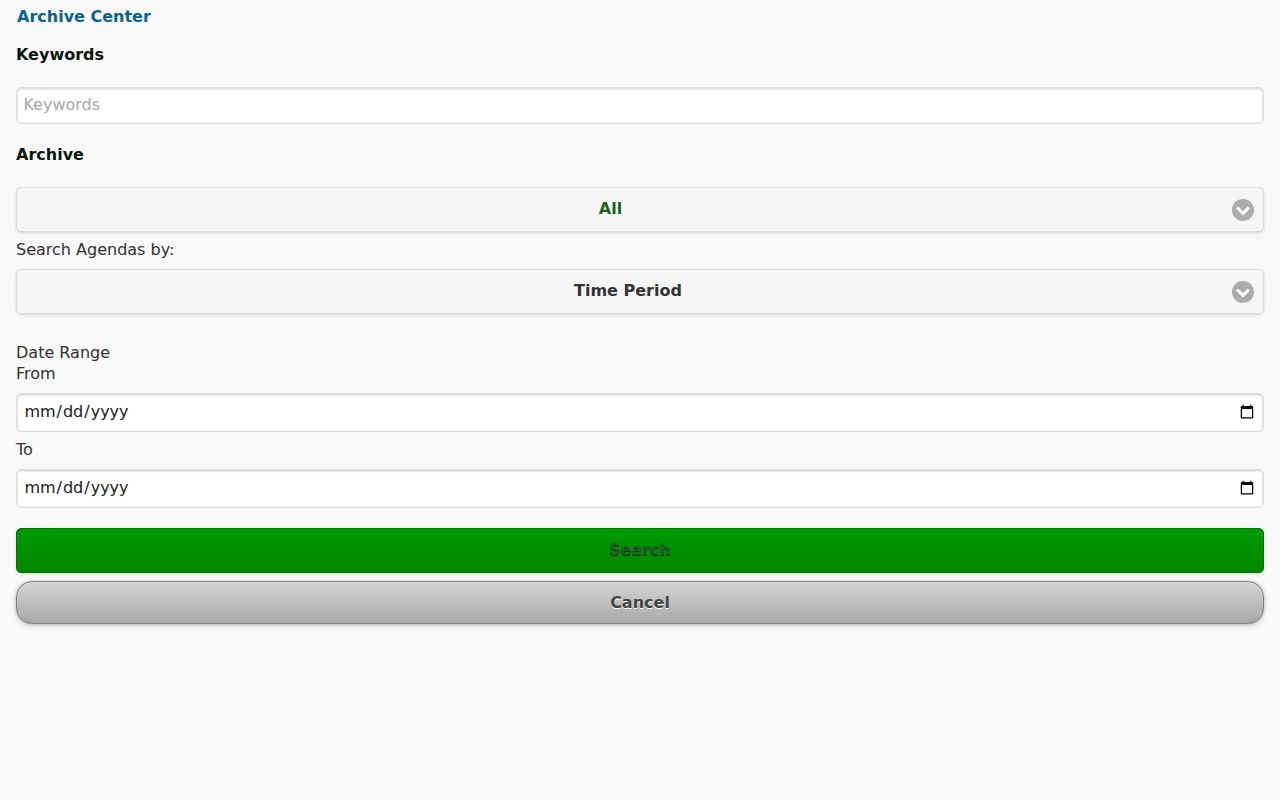
The archive image shows the city-document layer around an El Centro neighbors inquiry. It can supply civic context without turning a public notice into a private household roster.
Note: A city archive result is a municipal document lead, not a public member list for an El Centro block.
El Centro Neighbor Civic Routes
No official City of El Centro neighborhood-association umbrella directory or public HOA member directory was located. That absence matters. Community groups, congregations, schools, block-watch programs, and clubs may have public contact routes, but membership lists are usually private unless an organization chooses to publish them. Use a published office or organization contact rather than trying to expand a public-facing name into a block claim.
The city Police Department's community programs and City Council public meetings can answer civic questions. The El Centro Public Library, Pioneers' Museum, Imperial Valley Desert Museum, and regional organizations can help with local history. None should be presented as an open list of current neighbors without a verified source.
For a municipal address record, a focused City Clerk or NextRequest request should identify the department, APN, normalized street address, record type, and date range. The custodian can release nonexempt material and explain any redaction.
For the broader historical layer, the El Centro city directory collections cover printed volumes and their access limits. A whole named street belongs on the street directory page; the neighbors workflow stays with the immediate block.
El Centro Staff Directory Routing
The City's staff directory is a legitimate public contact tool for routing a request to City Clerk, Planning, Code Enforcement, Police Records, Business License, or the Library. It lists departments, names, titles, work phones, and contact links. It is not a residents directory, and a city employee's public work contact should never be treated as a home address.
Use the directory to find the office that owns an address record, then ask for the nonexempt record under the city's public-record process. A precise office question is more likely to identify a permit card, archive item, or code record than a generic search for “neighbors.”
See the City of El Centro staff directory for contact routing.
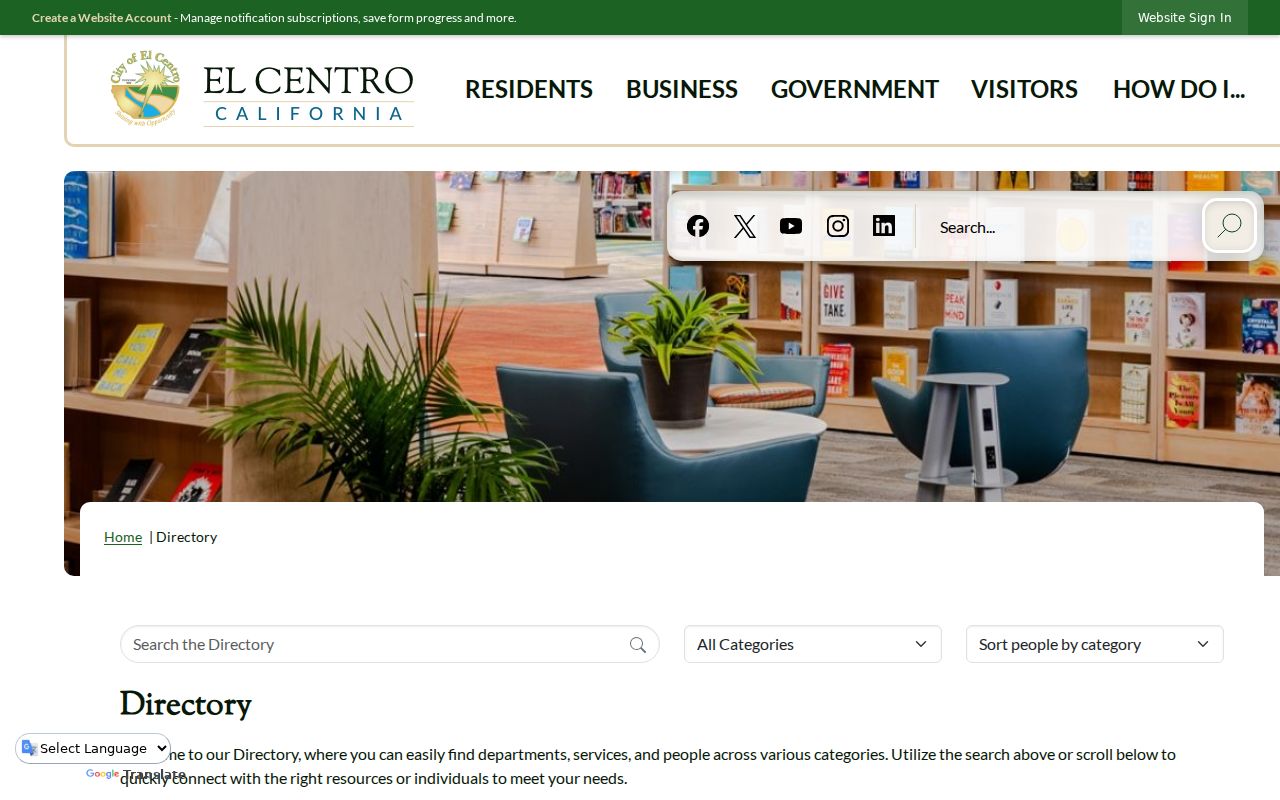
The staff-directory image is a request-routing aid for an El Centro neighbors search. It identifies a public office, not a household or block membership.
El Centro Neighbor Source Comparison
Commercial compilation tools may join public and purchased data into a convenient result, but their merges, dates, and relationships are not authoritative. Official sources take longer because each one has a narrower purpose. The comparison keeps the tradeoff clear without treating either category as a complete block directory.
| Source type | Strength | Limit |
|---|---|---|
| Assessor and map | Parcel, APN, situs, spatial adjacency | Assessed owner is not every occupant |
| Recorder and city request | Dated instruments and municipal files | Requires the right identifier and may be redacted |
| Commercial compilation | May suggest a lead across sources | Stale merges and uncertain household relationships |
For a responsible El Centro neighbors result, cite the custodian, source date, parcel or document number, and the fact shown. Do not repeat a third-party association as though the county, city, or court confirmed it.
Note: Official sources are narrower and slower, but their dates and record roles are easier to verify than a compiled household association.
Privacy Limits on El Centro Neighbors
Public property data usually identifies assessed owners, not children, roommates, care-of recipients, or every person at a site. DMV addresses are protected. Utilities and delivery records are not public street directories. Safe at Home and confidential voting can keep protected addresses out of ordinary disclosure. A map can be approximate, and the county warns that parcel data are not survey accurate.
Lawful block research. El Centro neighbor records may support parcel history, civic research, family history, or a safe reconnection. Do not use a block search to stalk, harass, threaten, or intimidate anyone, and do not reconstruct a protected address.
The right endpoint is often a narrower record request or no conclusion. A block search is complete when it states which parcels were checked, which fields were public, which source dates apply, and which people or addresses remain outside the public record.
That source note also protects future readers from treating an old map pop-up or directory line as a current fact. Keep the original address, APN, document number, and publication date with the conclusion.